
Who It's For
Is This For Me?
Probably the easiest place to start is with what you wish felt different. Maybe you’re tired of your brain running all the time. You overthink everything, have a hard time letting things go, or spend way too much energy worrying about things you know you can’t control. Maybe you’ve been feeling down, unmotivated or just not quite like yourself. You’re still doing what needs to be done, but everything seems to take more effort than it should. Or maybe you’re actually doing pretty well. You’re interested in feeling more focused, handling stress better, or taking care of your brain with the same intention you bring to the rest of your health. Those are all reasons people come talk to us.
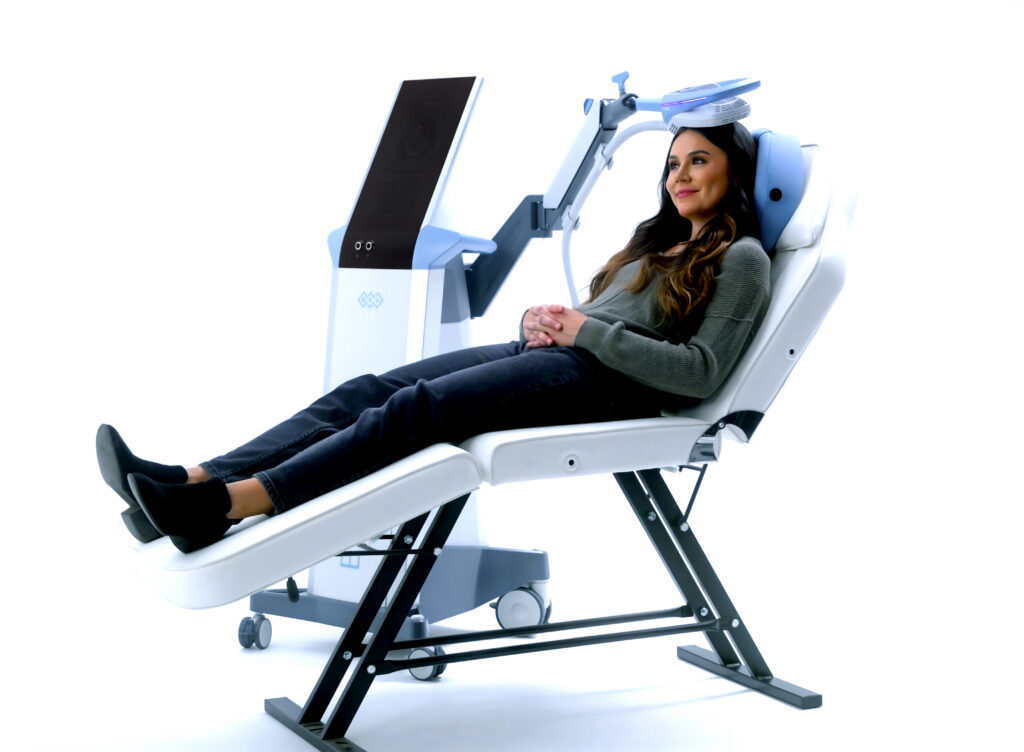
Could EXOMIND Be Right for You?
Mental health rarely fits neatly into one diagnosis. You might call it depression. Or anxiety. Or trauma. Or maybe you just know that your brain feels stuck — stuck in worry, stuck in a loop, stuck reaching for something that gives you relief, or unable to get back to feeling like yourself. EXOMIND uses noninvasive transcranial magnetic stimulation (TMS) to influence specific brain networks involved in mood, emotional regulation, motivation, cognitive control, and behavior. At Sage Brain Health, we look at the person first — not just the label.
FDA-Cleared Treatment for Depression
EXOMIND is FDA-cleared in the United States for the treatment of Major Depressive Disorder (MDD). Depression can look different from person to person. It isn’t always obvious sadness. It can also show up as:
- Low motivation or difficulty getting started
- Emotional flatness or feeling disconnected
- Loss of interest or pleasure
- Persistent negative thinking
- Low energy
- Difficulty concentrating
- Feeling overwhelmed by ordinary tasks
- Feeling like you’ve done the therapy, tried the medication, or made the lifestyle changes — but something still isn’t shifting
For appropriate clients, EXOMIND may be used as part of a broader treatment plan that can also include psychotherapy, medication management, lifestyle changes, and other supports.
Beyond Depression
TMS has been studied across a much broader range of psychiatric and behavioral conditions. Some uses of EXOMIND outside of Major Depressive Disorder are considered off-label, meaning they are not currently FDA-cleared indications for EXOMIND in the United States.
Off-label does not mean experimental in the everyday sense of the word, nor does it mean a treatment is appropriate for everyone. It means the technology is being used for a purpose beyond its specific FDA-cleared indication based on available research, clinical judgment, and an individualized assessment. At Sage Brain Health, we may consider EXOMIND as an adjunctive option in areas such as:
Anxiety & the “Busy Brain”
For some people, anxiety feels less like fear and more like a brain that simply will not turn off. This can include:
- Persistent worry
- Rumination and overthinking
- Difficulty mentally disengaging
- Hypervigilance
- Feeling constantly “on”
- Physical tension associated with persistent worry
- Difficulty shifting attention away from threatening or negative thoughts
TMS is being studied for anxiety disorders and anxiety symptoms. Use of EXOMIND specifically for anxiety is off-label in the United States.
Trauma & PTSD Recovery
Trauma doesn’t only live in the story of what happened. It can affect the brain systems involved in threat detection, emotional regulation, attention, and the ability to recognize safety.
For people doing trauma-focused therapy, we may consider EXOMIND as an adjunct to the therapeutic work — not a replacement for it.
The goal is not to erase a memory. Instead, treatment may be considered when someone continues to struggle with symptoms such as hyperarousal, emotional reactivity, avoidance, intrusive experiences, or difficulty returning to a regulated state. Use for PTSD and trauma-related symptoms is off-label.
OCD, Intrusive Thoughts & Compulsive Patterns
OCD can create an exhausting cycle: intrusive thought → distress → compulsion or reassurance → temporary relief → repeat
TMS has been studied for obsessive-compulsive symptoms and the brain circuits involved in cognitive control and compulsive behavior. EXOMIND may be considered for individuals struggling with:
- Intrusive or repetitive thoughts
- Mental checking
- Reassurance-seeking
- Repetitive behaviors
- Difficulty disengaging from obsessive loops
- Compulsive patterns that feel difficult to interrupt
Use of EXOMIND for OCD is off-label.
Binge Eating, Food Cravings & Loss-of-Control Eating
Sometimes eating isn’t primarily about hunger. Food can become part of the brain’s reward and relief system — especially when stress, emotion, impulsivity, cravings, and habit loops are involved. Research is examining TMS and EXOMIND-related technology for binge eating, food cravings, and the neural systems involved in reward and self-regulation. This may be relevant for people who describe:
- Binge eating
- Intense food cravings
- Loss-of-control eating
- Repetitive emotional eating
- Feeling caught in a reward/craving cycle
- Knowing what they want to change but struggling to interrupt the behavior
EXOMIND is not a weight-loss treatment, and eating disorders require appropriate clinical assessment and treatment. Use for binge eating or food cravings is currently off-label.
Compulsions & Habit Loops
Not every repetitive behavior meets criteria for OCD. Some people simply describe feeling caught in a loop:
urge → behavior → relief or reward → repeat
Because brain networks involved in reward, inhibition, attention, and self-regulation play a role in many repetitive behaviors, TMS is being investigated across several compulsive and behavioral conditions. EXOMIND may be considered as one component of care when rigid or repetitive behavioral patterns are interfering with someone’s ability to make the changes they want.
Substance Use & Craving Management
Substance use can involve powerful interactions between stress, reward, craving, impulse control, and learned behavior. TMS has been studied as a potential tool for influencing some of the neural circuits involved in craving and addiction.
For appropriate individuals, EXOMIND may be considered as an adjunct to established substance-use treatment — not as detoxification, emergency care, or a stand-alone treatment for substance dependence.
Potential areas of interest include craving, repetitive reward-seeking behavior, and difficulty interrupting established substance-use patterns. Use for substance-use disorders is off-label.
Then we want to hear about it. Tell us what’s helped. Tell us what hasn’t. Tell us what you hated. Tell us what worked for six months and then stopped working. That information matters. We don’t assume ExoMind is the answer simply because you walked through our door. We want to understand where you’ve been before we talk about where you might go next.
That’s okay too. You don’t need a diagnosis to care about your brain. Focus, resilience, mental clarity, motivation and how well you manage stress all affect the way you experience your life. If you’re curious about whether ExoMind belongs in your approach to overall wellness, that’s a conversation we’re happy to have.
This is important to us. We work in mental health, so of course we see the value of ExoMind for people who are struggling. But that’s not the only reason to be interested in brain health.
You might be the person everyone else thinks has it completely together, while you know how much energy it takes to keep everything moving. You might simply be noticing that your focus, motivation or ability to handle stress isn’t what it used to be. You don’t have to wait until something is really wrong before you’re allowed to do something about it.
If you’re in therapy, stay in therapy. If medication is helping you, we’re not here to tell you otherwise. If you’ve built routines that make you feel better, keep them.
ExoMind doesn’t have to be an either/or decision. For some people, the interesting question is whether working directly with the brain can support everything else they’re already doing. That’s especially true when you find yourself saying:
“I know what to do. I just can’t seem to do it when I need it.”
We hear that a lot.
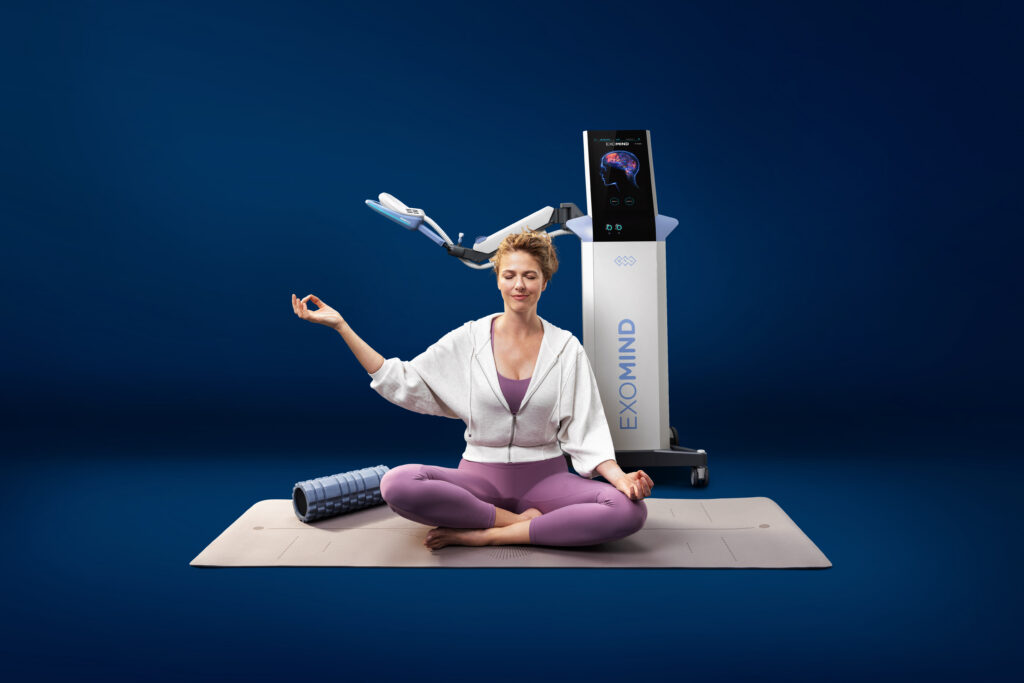
Sometimes the Diagnosis Isn't the Whole Story
You don’t necessarily need to arrive saying:
“I have exactly this diagnosis.”
You might simply know:
My brain won’t shut off. I can’t stop going back to the same thoughts. I understand my patterns, but I can’t seem to change them. Therapy has helped me understand what happened, but my body and brain still react. I keep reaching for food, substances, scrolling, reassurance, or another behavior even when I don’t want to. I don’t feel depressed exactly — I just don’t feel like myself anymore.
Those experiences matter too. Our job during a consultation is to understand what you’re experiencing, what you’ve already tried, what you want to change, and whether EXOMIND is clinically appropriate for you.
EXOMIND Works Best as Part of the Bigger Picture
We don’t believe a machine replaces therapy, medication management, relationships, behavioral change, sleep, movement, nutrition, or the work of building a life that actually feels good to live.
The technology is one tool.
For some people, changing brain activity may make it easier to engage with the other work they’re already doing.
That’s why Sage Brain Health approaches EXOMIND differently. When appropriate, we can collaborate with your therapist, psychiatric provider, physician, or other members of your treatment team so that the changes you’re experiencing can be translated into your everyday life.
That’s completely okay. You don’t have to figure out the neuroscience — or even have the perfect words for what’s happening — before talking with us.
Tell us what feels stuck. We’ll help you determine whether EXOMIND makes sense as part of your next step.