
Research & Testimonials
How ExoMind Works
You don’t need to understand neuroscience to consider ExoMind. But if you’re someone who wants to know exactly what we’re doing, why we’re doing it, and how good the evidence actually is, this page is for you.
Start with TMS
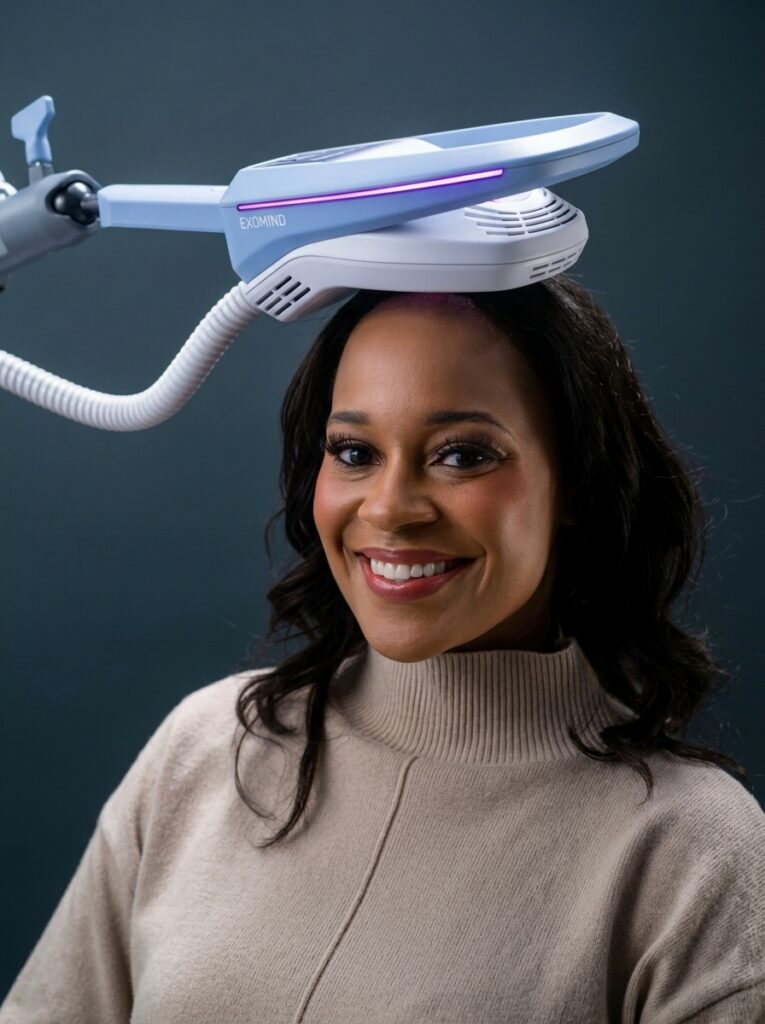
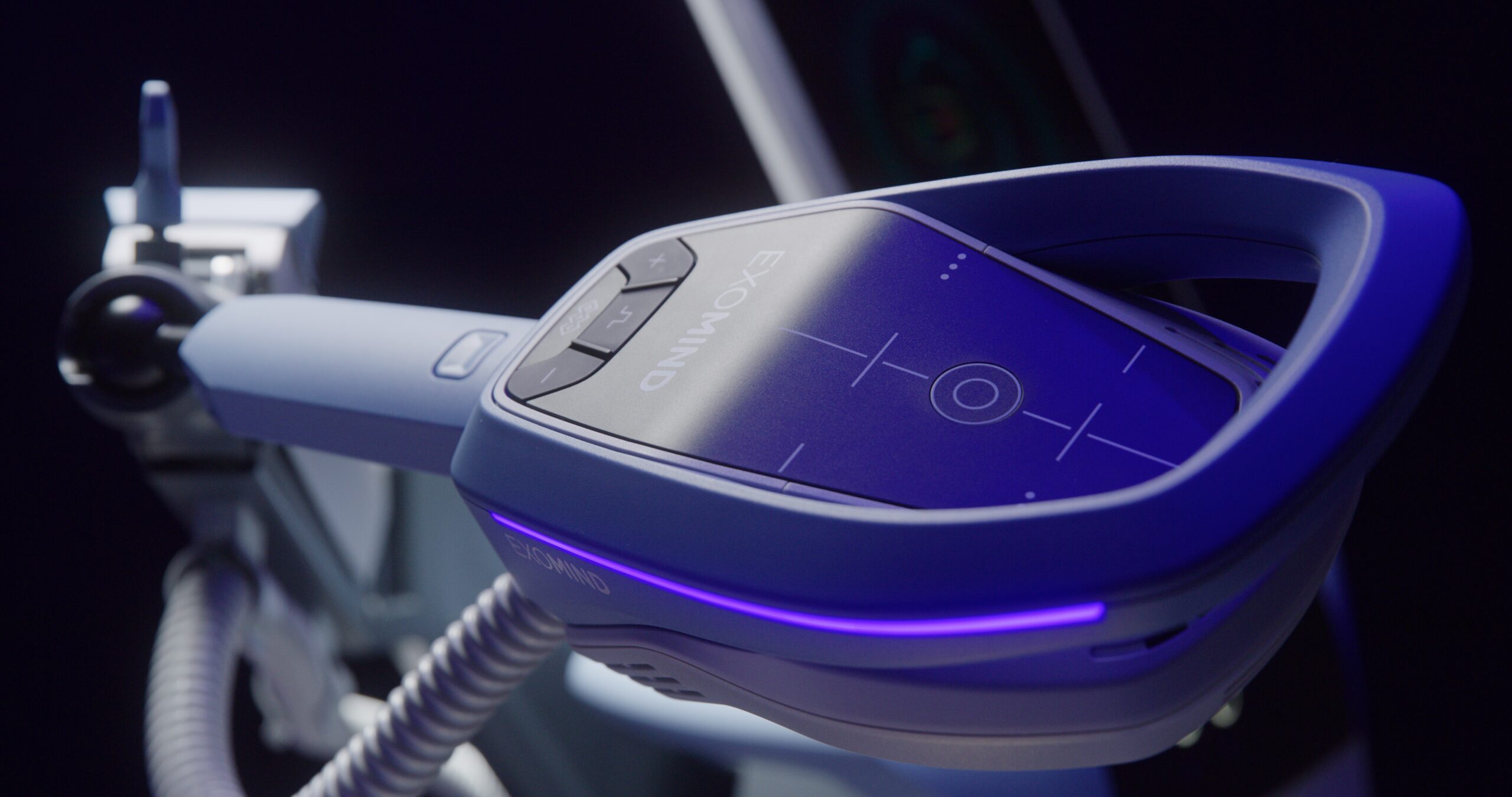
ExoMind is a form of transcranial magnetic stimulation, or TMS. TMS uses a rapidly changing magnetic field to induce a small electrical current in the brain tissue underneath the treatment coil. That current changes the activity of neurons in the targeted area. Nothing enters the brain. There is no surgery, anesthesia or implanted device. The technology itself isn’t new. TMS has been studied for decades, and its use in psychiatry is particularly well established in major depressive disorder. ExoMind is a newer TMS platform that uses this same basic neuroscience with its own coil, stimulation parameters and treatment protocols. That distinction is important.
The research on TMS is much larger than the research specifically on ExoMind. We don’t treat those as interchangeable.

What part of the brain are we working with?
One of the primary targets used with ExoMind is the left dorsolateral prefrontal cortex, or DLPFC. The DLPFC is involved in executive functioning, attention, working memory, decision-making and emotional regulation. But thinking about one isolated part of the brain is somewhat misleading. The DLPFC is connected to larger networks that include deeper areas involved in emotion, reward, motivation and the stress response. That’s really what makes TMS interesting. We aren’t trying to make one small area of the brain “stronger.” We’re using stimulation at a particular point to influence activity within a larger network.
If you want the neuroscience:
A changing magnetic field generated by the coil passes through the skull and induces an electrical field in cortical tissue. When that field reaches sufficient intensity, it can depolarize neurons. Delivering those pulses repeatedly can alter cortical excitability beyond the period of stimulation itself. The working theory is that repeated stimulation can produce longer-lasting changes in neural activity through mechanisms related to synaptic plasticity. In simpler terms:
We stimulate a specific part of the brain repeatedly because the brain is capable of adapting to repeated stimulation. That ability to change is called neuroplasticity.
Your brain is constantly changing. Every time you learn something, practice something, develop a habit or adapt to an experience, neural pathways are being reinforced or modified. That’s useful when the brain learns something we want it to learn. It’s less useful when certain patterns become rigid. Depression is a good example. It isn’t simply a collection of negative thoughts. Research has identified differences in the activity and connectivity of brain networks involved in mood, cognitive control, reward and emotion.
TMS gives us a way to influence some of those networks from outside the brain. That does not mean we’re erasing thoughts, memories or emotions. And it doesn’t mean we’re changing someone’s personality. The goal is modulation, not control.
This is where the conversation gets more interesting. Someone familiar with psychiatric TMS may know that conventional treatment for depression often involves repeated visits over several weeks. So hearing that an ExoMind protocol may involve only a handful of treatments should immediately raise a reasonable question:
How can that possibly be the same thing?
It isn’t the same protocol. ExoMind uses different treatment parameters, including the number and pattern of pulses delivered within a session. Studies of ExoMind have evaluated condensed protocols involving four to six treatment sessions, typically spaced several days apart. The idea of delivering TMS in shorter or accelerated protocols isn’t unique to ExoMind. Accelerated TMS is an active area of neuroscience research. But there’s an important caveat:
A shorter ExoMind protocol should not simply be assumed to have the same evidence, effectiveness or durability as an established conventional TMS protocol. Those questions require their own research. And that research is still developing.
This is where we think transparency matters. A 2026 review examined eight ExoTMS interventional studies involving 182 participants who received active treatment. Across those studies, researchers reported changes in areas including well-being, mood, perceived stress, motivation and mental energy. Treatment also appeared to be well tolerated. That’s encouraging. It’s not definitive.
The studies included different populations and different research questions. Some were controlled studies. Others were open-label studies, meaning participants knew they were receiving the treatment. Many outcomes were also self-reported. Those limitations make it difficult to conclude from the existing data exactly how much improvement was caused by ExoMind itself, how it compares with other treatments, and how long changes will last. Those are questions that larger, independent, controlled trials need to answer.
Across the eight studies included in the 2026 review:
182 people received active ExoTMS treatment.
Protocols generally involved 4–6 sessions.
93.3% of participants described treatment as comfortable.
Average reported pain was 0.7 out of 10.
At one month, 73.8% reported improvement in overall well-being.
At three months, 78.1% of participants answering the relevant questionnaire reported feeling less stressed. No serious adverse events were reported in the studies included in the review. Those numbers are useful. But they need context. They are pooled results from several different studies and populations, and many are patient-reported outcomes rather than objective measures of clinical response. We don’t think those two things should be presented as though they’re the same.
This is one reason we’re interested in ExoMind. Researchers aren’t only looking at traditional psychiatric diagnoses. For example, one completed U.S. ExoMind study specifically examined psychological well-being in adults. Participants received four treatments over several weeks and were followed for three months. But it was a small study: 38 participants. It was also open-label and had no sham-control group. That means it’s useful preliminary evidence, but it can’t tell us with high confidence how much of any observed change came specifically from the treatment.
Another completed study examining stress and sleep used a randomized, sham-controlled design, which is a stronger methodology. Research is also exploring other areas involving reward pathways, eating behavior and depressive symptoms. We follow these studies because they’re interesting.
We don’t turn “interesting” into “proven.”
Before treatment, we determine your motor threshold. The motor threshold is essentially an individualized measure of how much stimulation is required to produce a measurable motor response. It gives us a reference point for dosing stimulation rather than treating every brain exactly the same way.
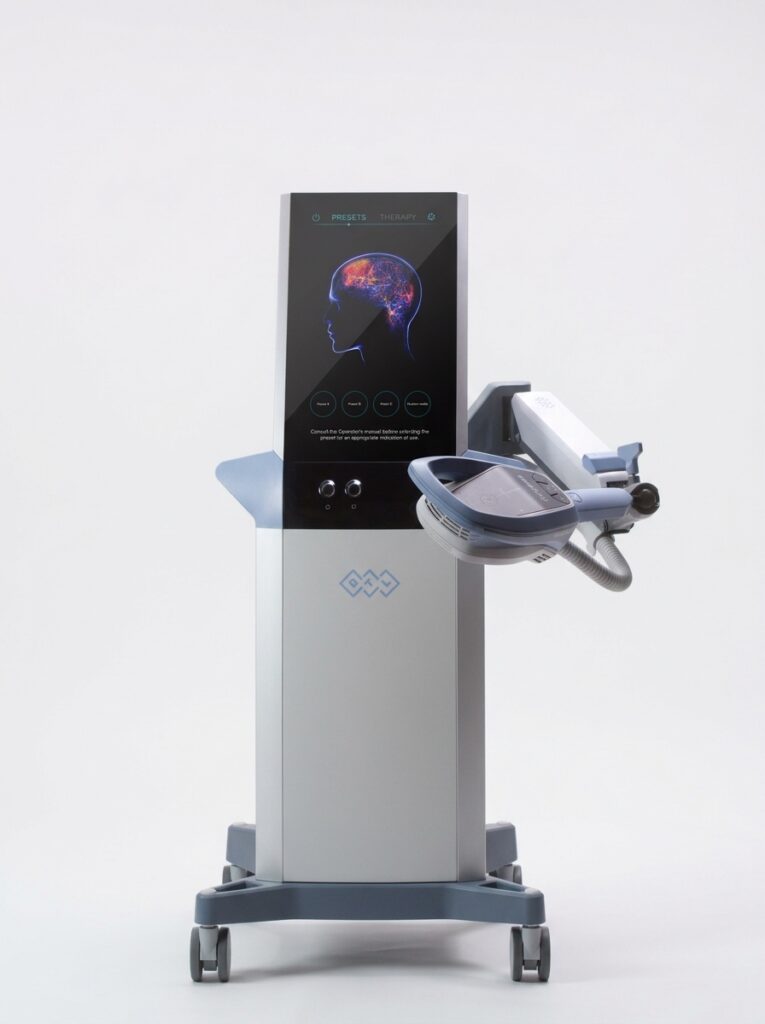
During the actual treatment, the coil is positioned over the target area and delivers a programmed series of magnetic pulses. You’ll hear clicking from the machine and feel tapping or pulsing on your scalp. You’re awake and able to communicate with us throughout the session. A treatment takes approximately 30 minutes, and there is no routine recovery period afterward.
TMS is non-invasive, but non-invasive does not mean risk-free. The most commonly reported effects associated with TMS are temporary scalp discomfort and headache. In the ExoTMS studies summarized in the recent review, reported adverse events were mild and transient, and no serious adverse events were reported.
The more significant known risk associated with TMS is seizure, although it is uncommon when treatment is delivered within established safety parameters. Certain medical conditions, medications and implanted metal or electronic devices can also change whether TMS is appropriate. That’s why screening isn’t a formality. We want to know about your medications, neurological history, previous seizures or head injuries, implanted devices and other relevant medical history before we treat you.
What do we know — and what don't we know?
We know:
TMS is a legitimate form of non-invasive neuromodulation with decades of scientific study behind it. We understand a great deal about how magnetic stimulation interacts with cortical neurons. There is substantial evidence supporting particular forms of TMS for specific psychiatric conditions, especially major depressive disorder.
Early ExoMind-specific research suggests the treatment is generally well tolerated and shows promising results across several areas of psychological well-being.
- TMS has decades of research.
- ExoMind appears well tolerated.
- Early research is promising.
We don't know yet:
Whether every benefit being explored with ExoMind will hold up in large, independent randomized controlled trials. How ExoMind compares head-to-head with established TMS protocols for many conditions. Exactly who is most likely to respond. How durable all of the reported wellness benefits are over the long term.
And we certainly can’t tell you that six treatments will change your life. Anyone who works with the brain should be comfortable saying “we don’t know yet.”
- Long-term durability.
- Head-to-head comparisons.
- Who responds best.
There are a lot of ways to work on feeling better. We know. We work in mental health. Therapy can be incredibly effective. Medication can be life-changing. Sleep, movement, relationships, nutrition and stress management matter more than most of us would probably like to admit. So why add ExoMind? Because it gives us another way in.
Most of the things we do for our mental health require the brain to participate. In therapy, you notice patterns and practice responding differently. With meditation, you learn to direct your attention. Lifestyle changes depend on motivation, consistency and follow-through. Those things matter. We aren’t trying to replace them. But sometimes the very brain you’re asking to make all of those changes is the part that’s struggling.
ExoMind is different because the treatment itself doesn’t depend on you being able to talk yourself out of a thought, concentrate harder, find more motivation or remember the right coping skill at exactly the right moment. Magnetic stimulation allows us to influence activity in targeted brain networks directly.
For some people, that makes it an interesting addition to everything else they’re already doing.
This deserves a real answer. Traditional repetitive TMS has a strong place in psychiatric care, particularly in the treatment of major depressive disorder. Depending on the protocol, traditional treatment can involve frequent appointments over several weeks.
ExoMind uses a different treatment protocol designed to deliver stimulation in a much smaller number of sessions. A typical ExoMind series may involve several approximately 30-minute treatments spread over a number of weeks. That’s a very different commitment.
It also doesn’t mean that a shorter ExoMind protocol should automatically be considered equivalent to every established traditional TMS protocol. They’re different approaches, with different protocols and different bodies of evidence. We’ll help you understand which conversation we’re actually having.
It doesn’t necessarily have to be instead of medication. Some people come to Sage because they don’t want to start medication or haven’t liked how they’ve felt on medications in the past. Others are taking medication that works well and have absolutely no reason to stop it.
ExoMind works differently. Medication travels through the body and can influence multiple biological systems. TMS allows us to target specific areas of the brain from outside the body. That difference is appealing to some people. But we aren’t going to tell you that one is universally “better.” The better option is the one that makes sense for you.
This might be our favorite combination. Therapy and ExoMind aren’t trying to do the same thing. ExoMind works with brain activity. Therapy helps you make sense of your experiences, relationships, reactions and choices, and gives you opportunities to practice doing something different. When someone begins noticing changes during ExoMind treatment, therapy can also provide a place to use them.
Maybe there’s a little more space before reacting. Maybe getting started doesn’t feel quite as impossible. Maybe the thought is still there, but it doesn’t grab quite as hard. Those moments matter. We want you to use them. That’s why Sage can work alongside your existing therapist rather than asking you to choose between the two.
Then we’re having a different conversation. Some people aren’t coming to Sage because something is terribly wrong. They’re interested in focus, mental energy, resilience, stress or simply taking a more proactive approach to brain health. We think that’s a completely reasonable reason to be curious about this technology.
We also think it’s important to be clear that wellness applications don’t necessarily have the same level of evidence or regulatory status as established medical uses of TMS. We’ll tell you what we know, what is still being studied and where a particular use falls.
Then you can decide whether it’s worth exploring.
The machine matters. So does who’s sitting beside it. Sage was created by a psychiatric nurse practitioner and a therapist because we wanted more than a place that simply delivers treatments. We want to understand why you’re here. We want to know what you’re already doing. And we want to pay attention to what changes along the way.
For someone seeking mental health recovery, that means we’re able to look at ExoMind in the context of therapy, medication and the rest of their care. For someone coming from the wellness side, it means we’re still approaching brain health with the respect it deserves.
You don’t have to become a psychiatric patient to care about your brain. And you shouldn’t have to walk into a med spa where no one understands mental health to access wellness-focused brain technology. Sage lives somewhere in between. That’s exactly where we wanted it.
What Our Clients Are Saying
That’s really the question. Not whether it’s newer. Not whether it’s easier than another treatment. Not whether someone on Instagram loved it.
Whether the evidence, time commitment, cost, potential benefit and limitations make sense for you. That’s what we’ll help you figure out. No pressure to decide before you walk through the door.